Low-Output Control
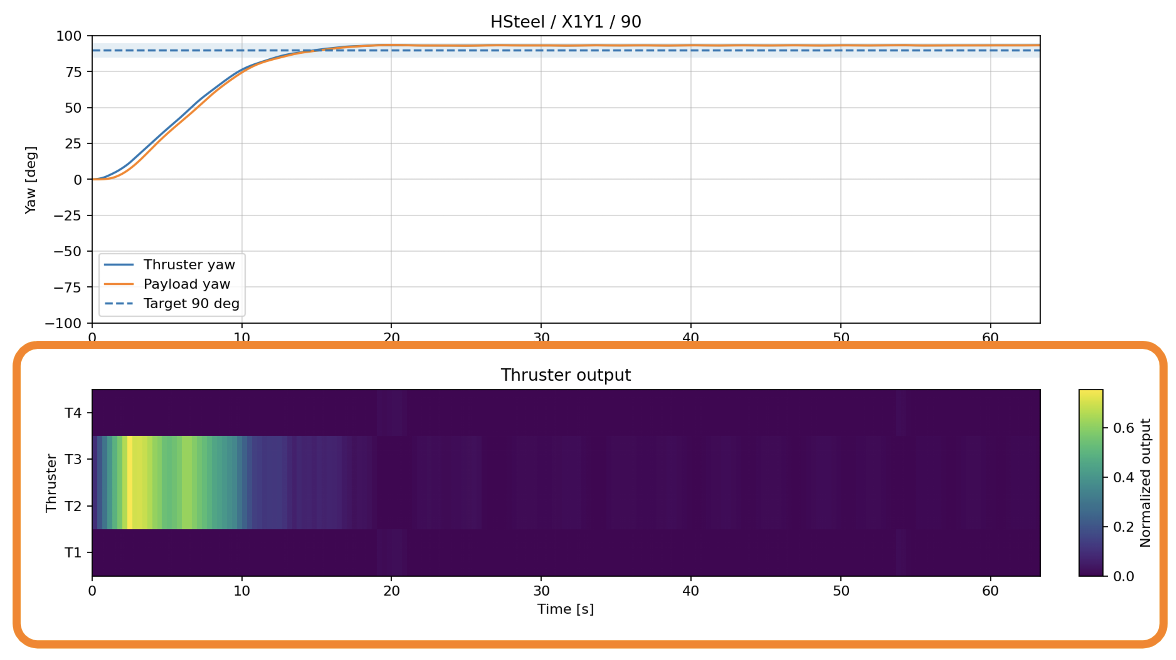
This study evaluates whether the target yaw angle can be reached using low-output control suitable for practical operation.
Low-Output Control ↓Payload Yaw Control — Part 2
This study focuses on three types of suspended payloads—H-steel, plate, and truss—and introduces two new objectives:low-output control and variable-target yaw control.
This study evaluates whether the target yaw angle can be reached using low-output control suitable for practical operation.
Low-Output Control ↓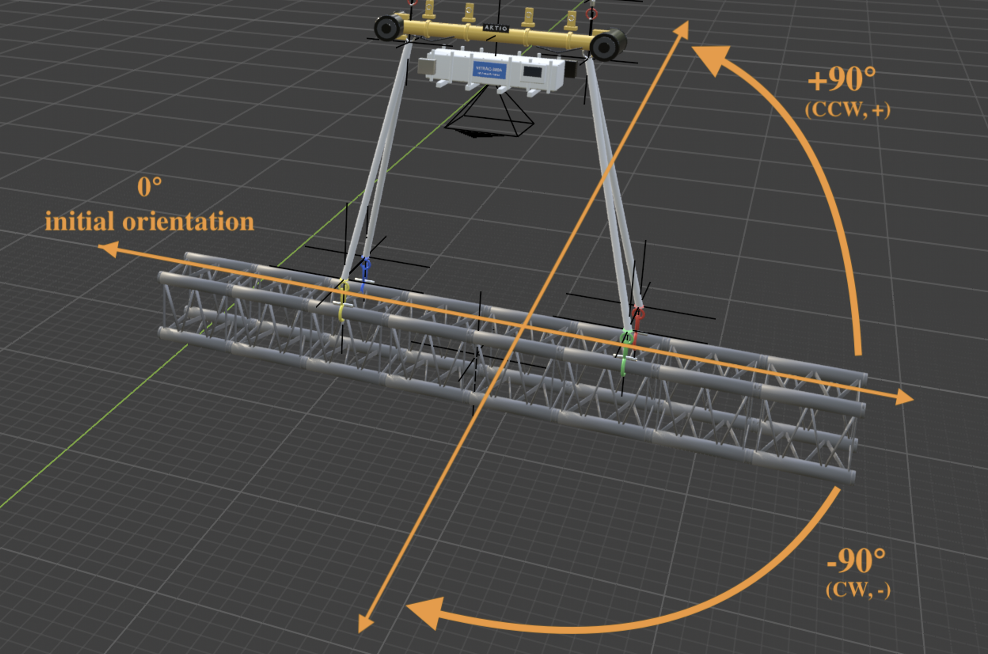
Use a single control model for multiple target orientations instead of preparing a separate model for each target angle. The yaw-angle tolerance is ±5°.
Variable-Target Yaw ↓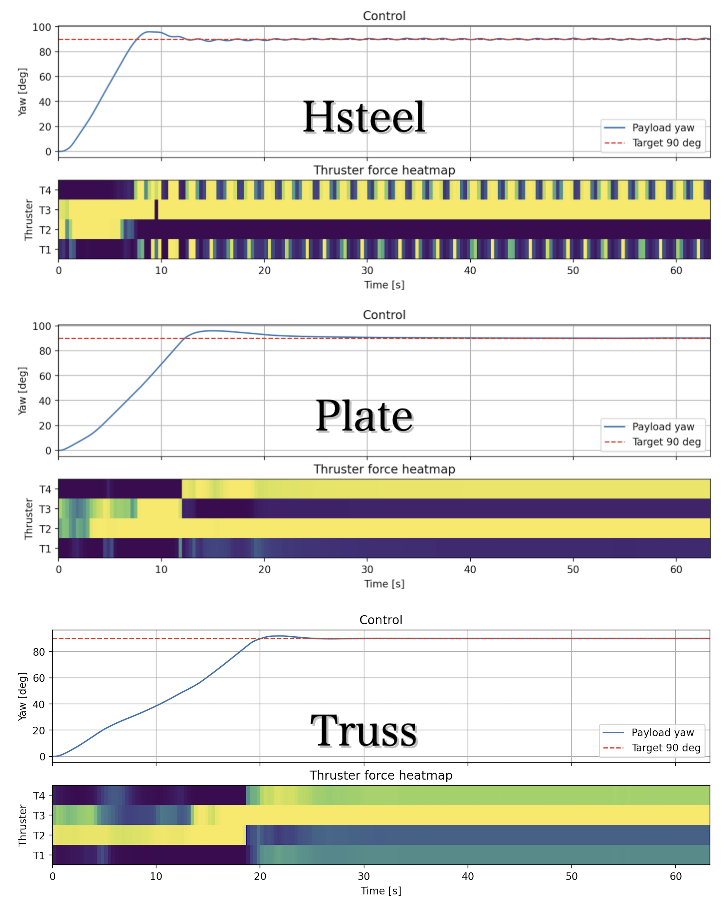
In Part 1, attitude control prioritized reaching the target yaw angle. Although the target orientation was successfully achieved,
Simply reaching the target angle is not sufficient for control intended for practical operation.
The goal here is to maintain target-reaching performance while achieving more natural attitude holding with lower thruster output.
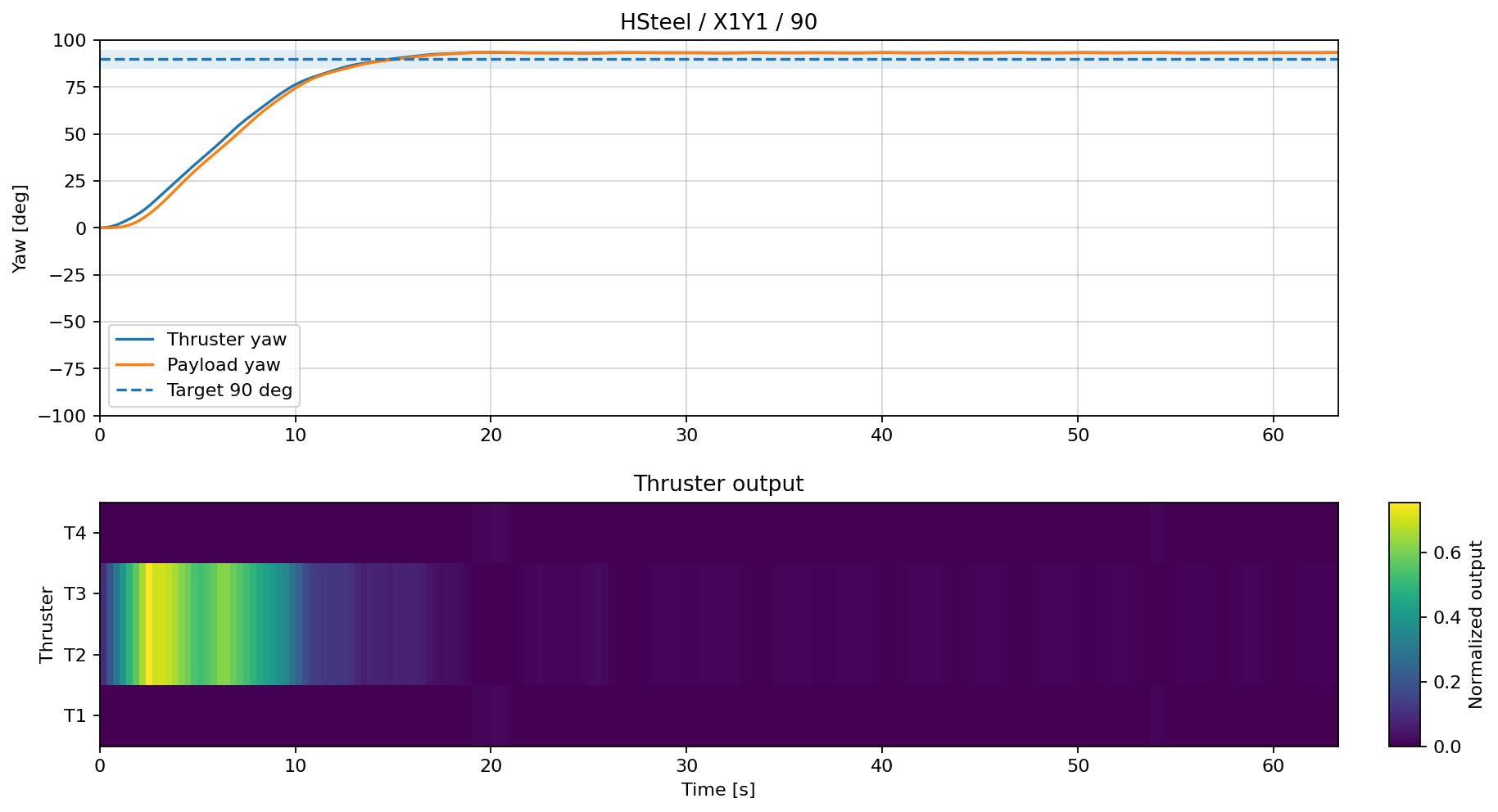
How to read the heatmap
The following four design policies were used to combine target-orientation achievement with low-output attitude holding.
Gradually reduce the allowable maximum thruster output as the payload approaches the target angle.
Apply a penalty based on output magnitude to reduce overall control effort.
Limit abrupt command changes to suppress oscillation and frequent switching of thruster output.
Require stable attitude holding with low average output even after the target angle has been reached.
In addition to attitude-control performance, this report uses heatmaps to evaluate the magnitude and temporal variation of thruster output and assess the feasibility of low-output control.
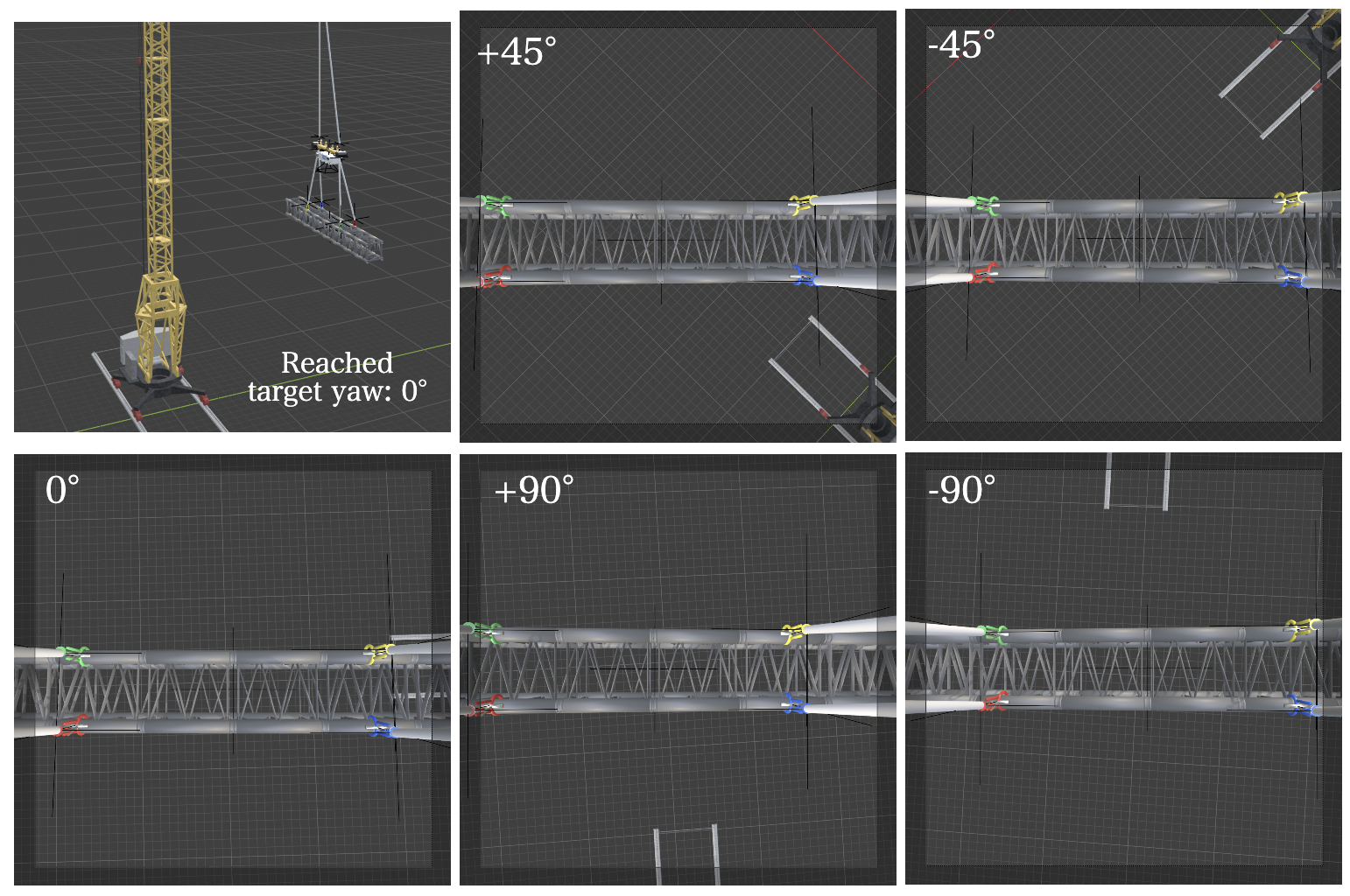
Multiple target yaw angles are given to a single control model, which controls the payload toward each target orientation.
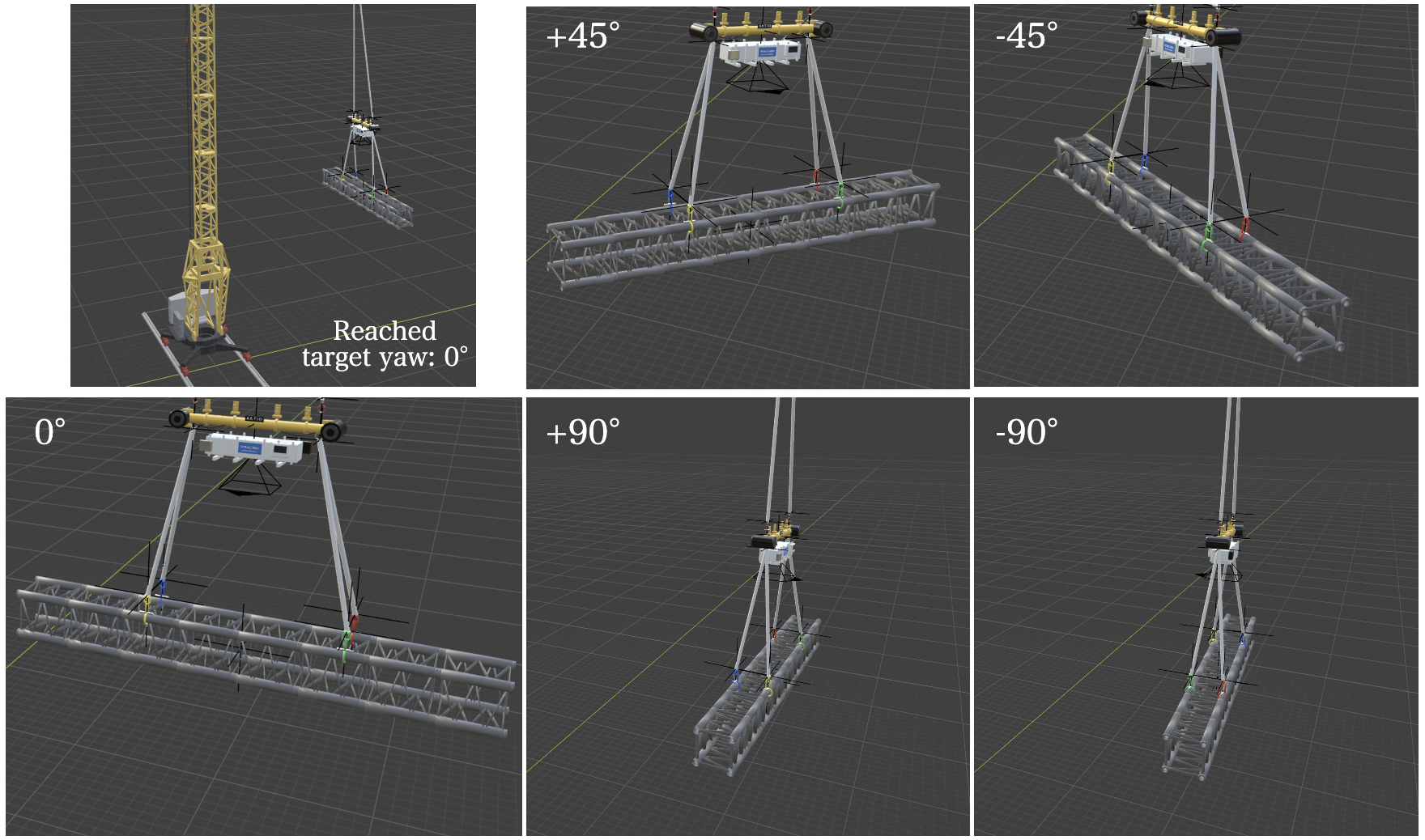
Images from the camera mounted on the thruster frame.
Payload Yaw Control — Part 2