Target Yaw 0°

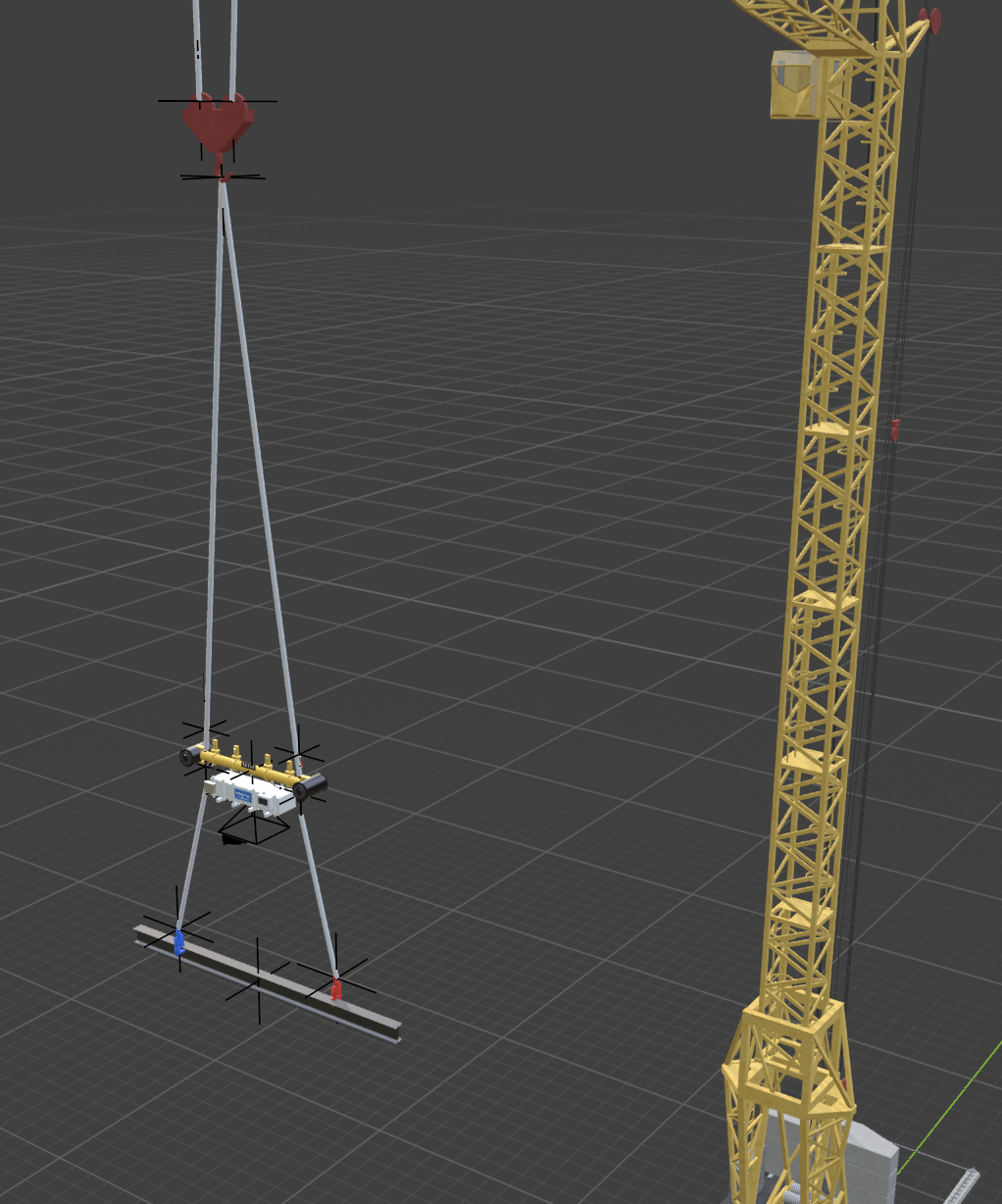
Initial position of HSteel at Target Yaw 0 degrees

Control Result

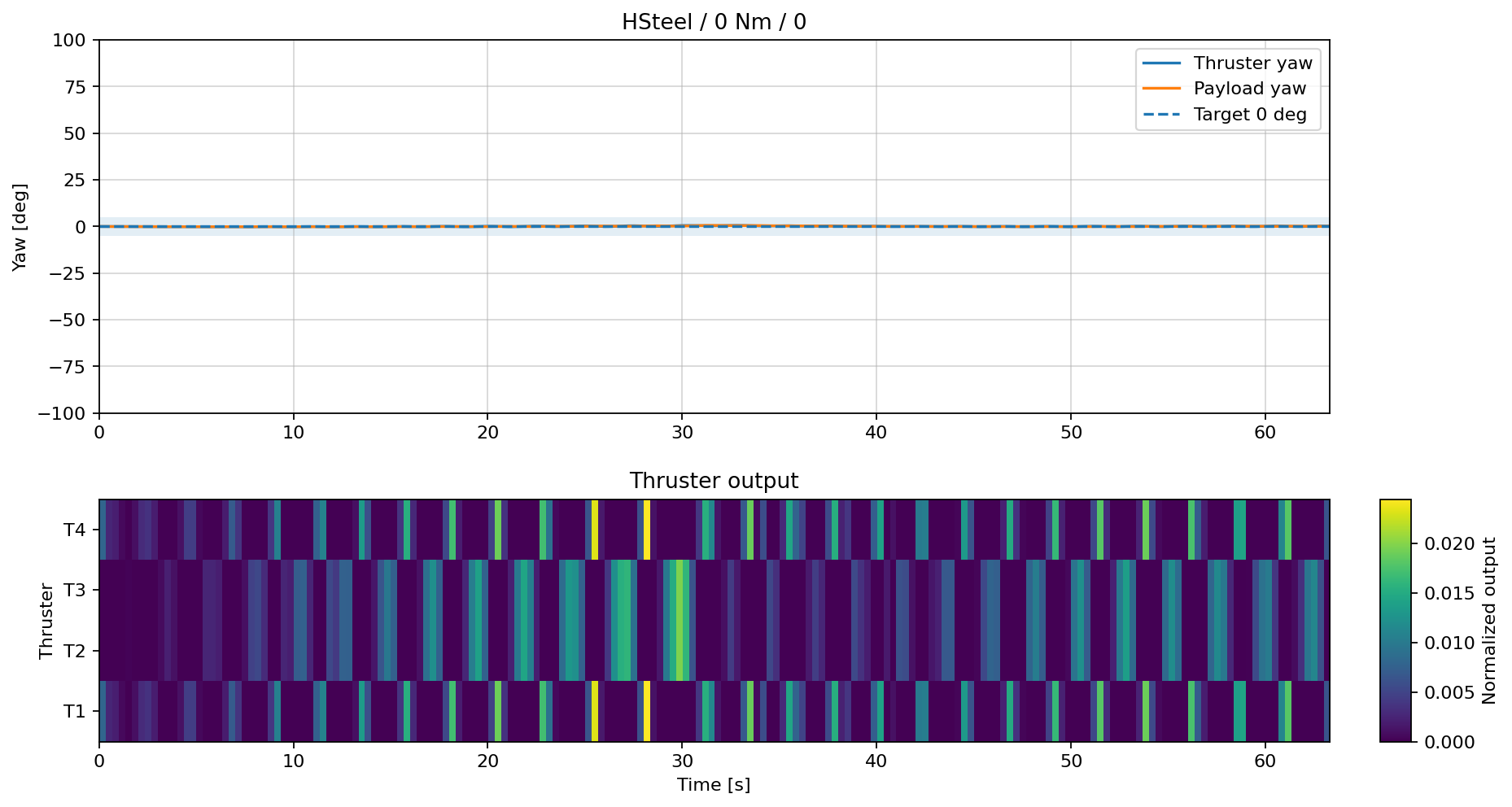
The initial yaw angle of 0° was maintained stably throughout the simulation.

HSteel control result at Target Yaw 0 degrees

Thruster Output

The attitude was maintained with only small corrective outputs, without requiring large thrust.

Target Yaw +45° / +90°

Target Yaw +45°

Control Result

The payload converged smoothly to the target yaw angle of 45° and remained stable afterward.
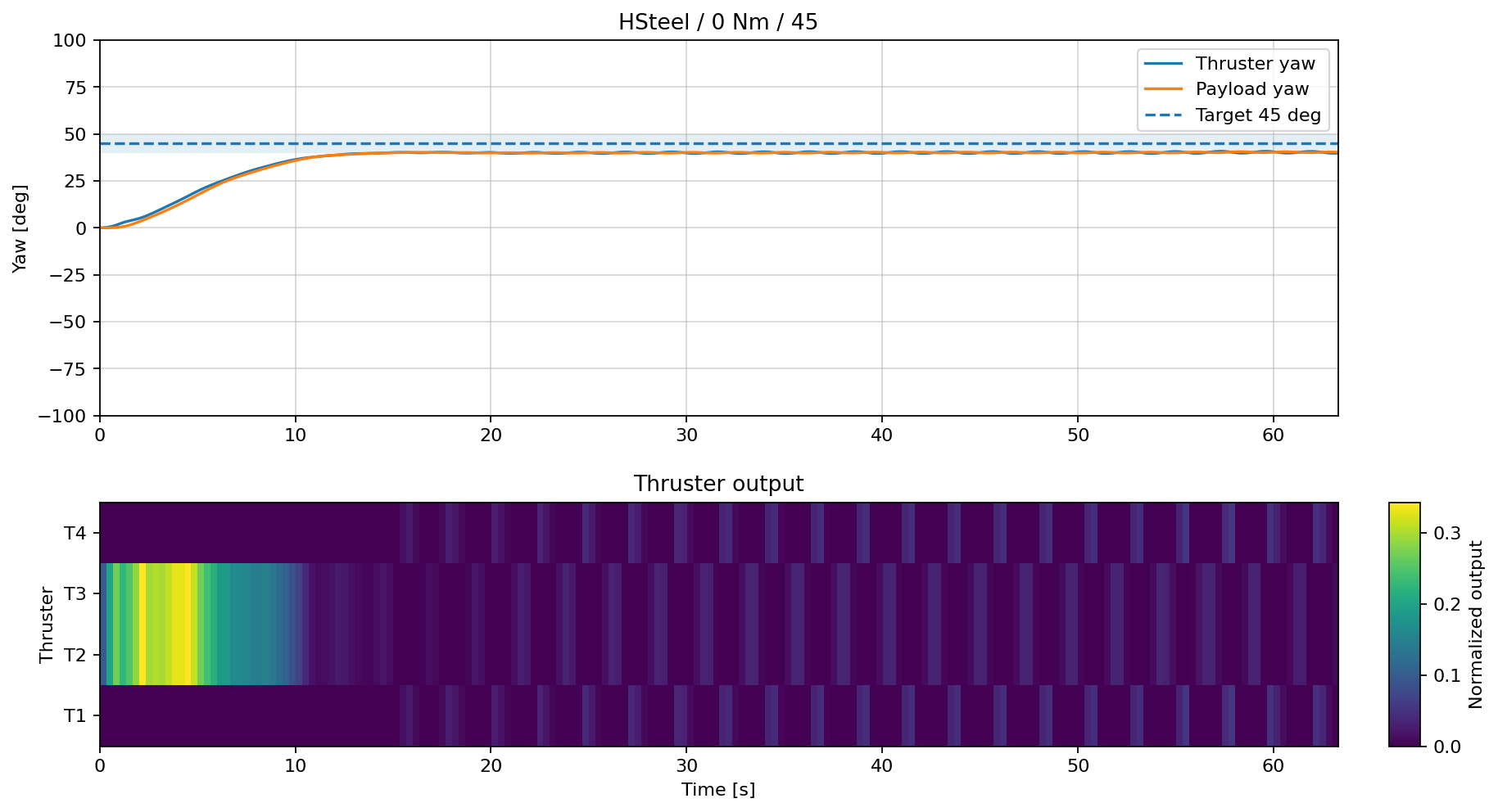
HSteel control result at Target Yaw plus 45 degrees

Thruster Output

Relatively large thrust was applied at the beginning of the rotation, then decreased as the payload approached the target angle. After reaching the target, only small corrective outputs remained.
Target Yaw +90°

Control Result

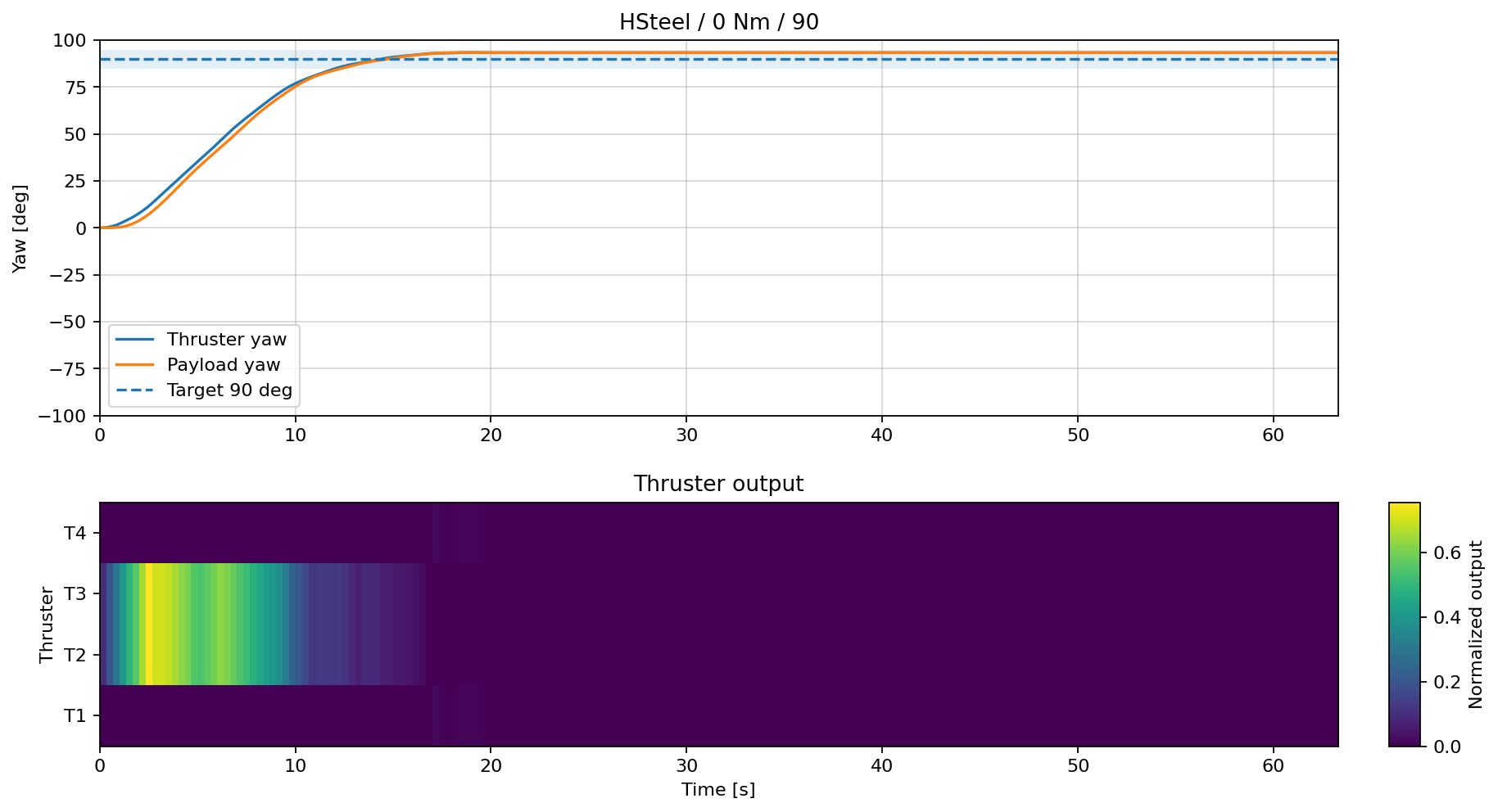
The payload converged stably to the target yaw angle of 90° and maintained its attitude after reaching the target.

HSteel control result at Target Yaw plus 90 degrees

Thruster Output

A somewhat larger initial output was used than in the 45° case, but the thruster output became nearly zero after reaching the target angle.

Target Yaw -45° / -90°

Target Yaw -45°

Control Result

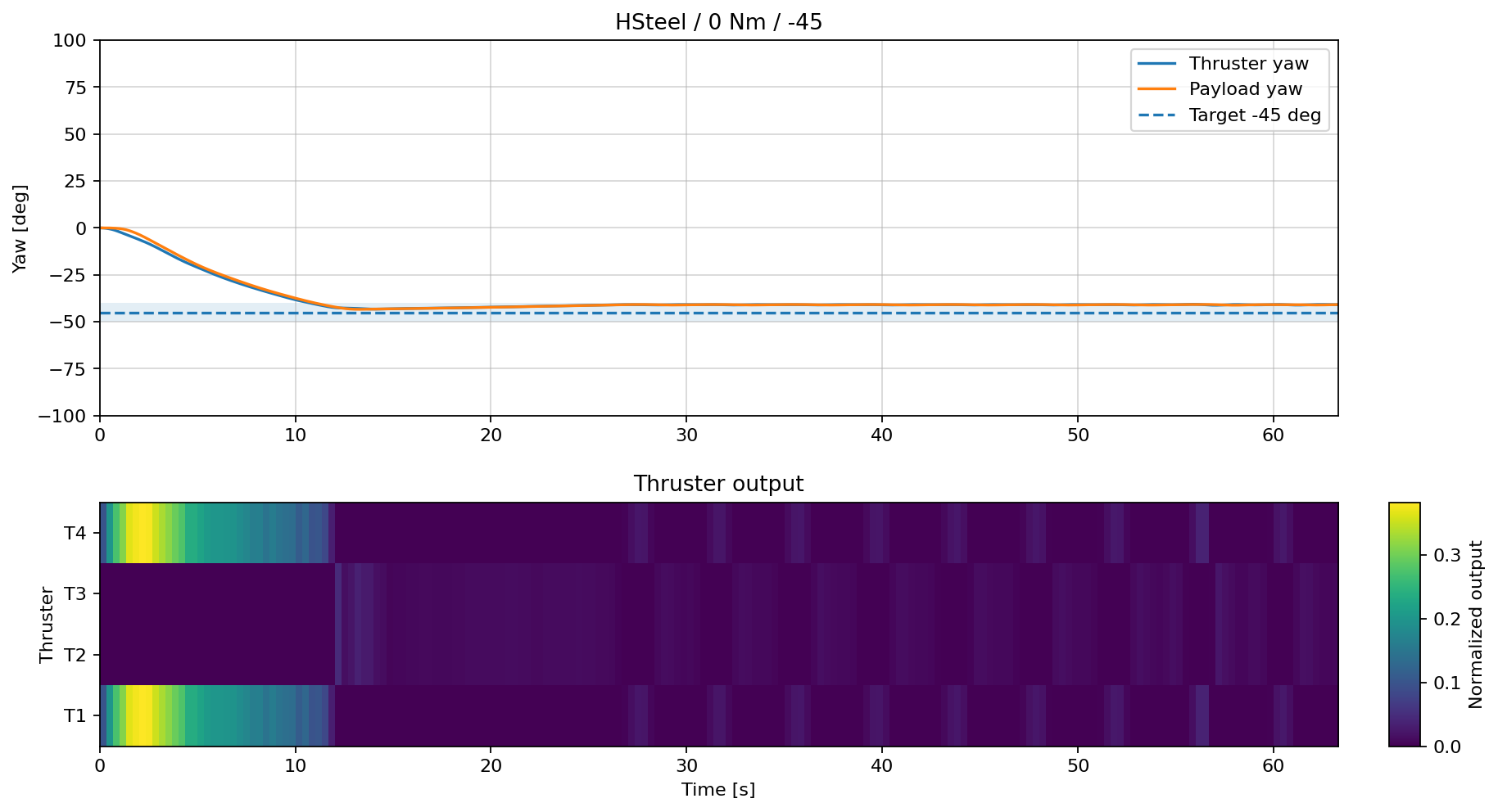
The payload converged smoothly to the target yaw angle of -45° and remained stable afterward.

HSteel control result at Target Yaw minus 45 degrees

Thruster Output

The output characteristics were similar to those for +45°, with the thrusters corresponding to the opposite rotation direction being selectively activated.

Target Yaw -90°

Control Result

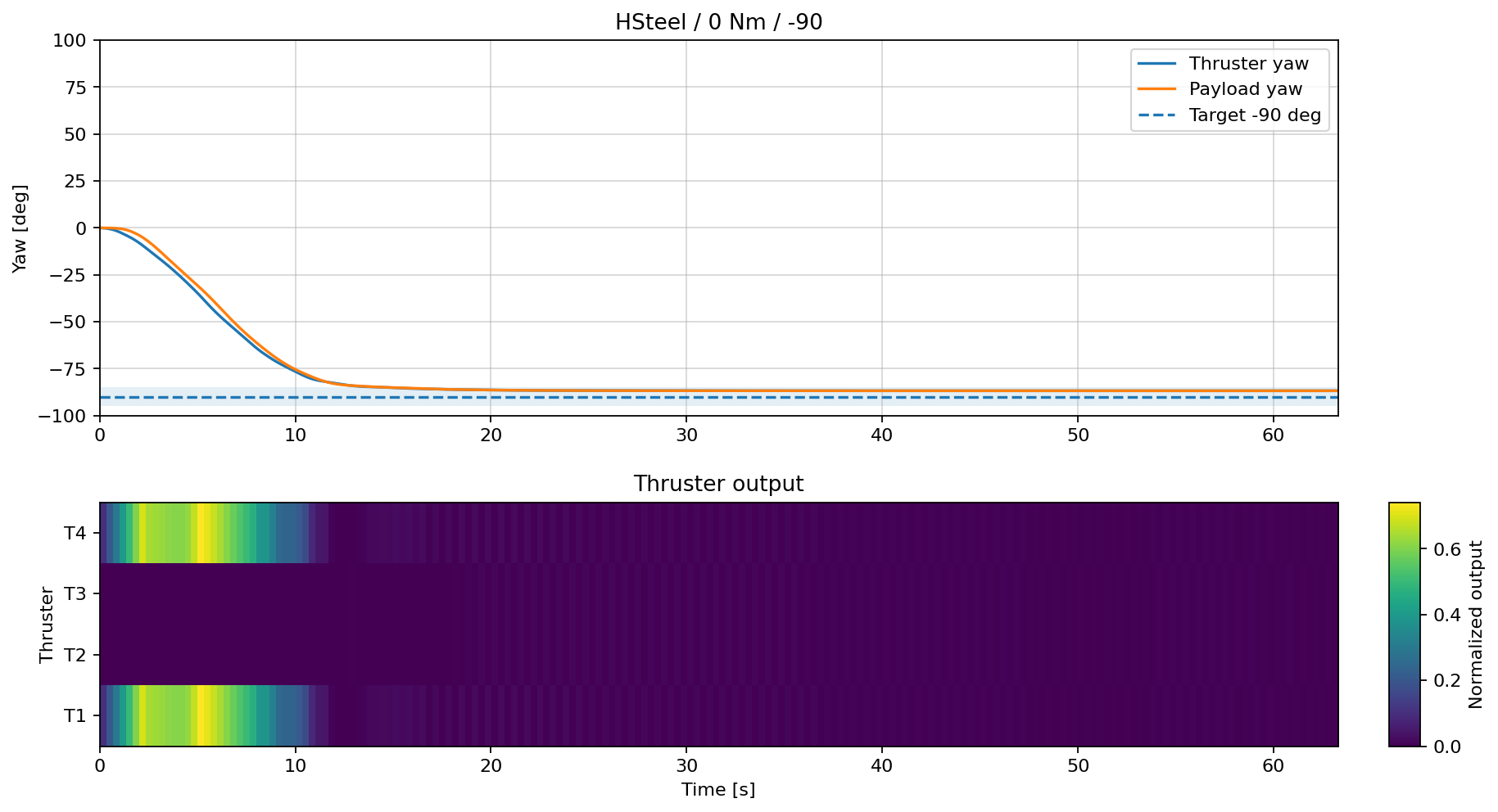
The payload converged stably to the target yaw angle of -90° and maintained its attitude after reaching the target.

HSteel control result at Target Yaw minus 90 degrees

Thruster Output

As in the +90° case, relatively large thrust was applied only during the initial rotation, after which the output became nearly zero.

Control Videos

Control results for Target Yaw ±45° and ±90° are shown from the overall and top views.

Overall View

Top View

Comparison with Previous Control

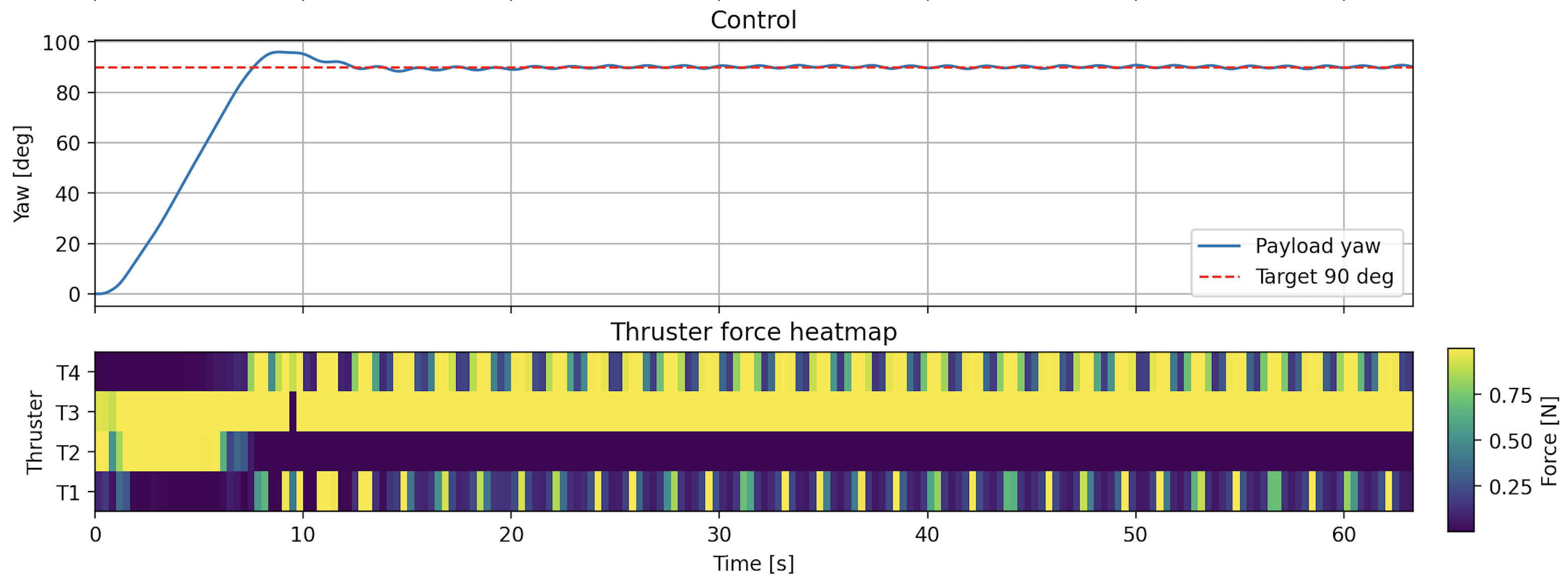
The Target Yaw +90° control result is compared withPart 1.

Previous Target Yaw +90°

HSteel Target Yaw plus 90 degree control in Part 1

Current Target Yaw +90°

HSteel Target Yaw plus 90 degree control in Part 2

The previous control reached the target angle quickly, but showed overshoot and continuous thruster output. With the current control, the time required to reach the target is longer, but the thruster output decreases smoothly as the payload approaches the target angle and becomes nearly zero afterward.

Payload Yaw Control — Part 2