Overview
In this project, we built a payload control environment, trained a reinforcement learning–based control model, developed a camera-based yaw estimation model, and finally integrated both models for demonstration on a Raspberry Pi. The final system successfully controlled the payload yaw under external disturbances.
Payload Control Environment
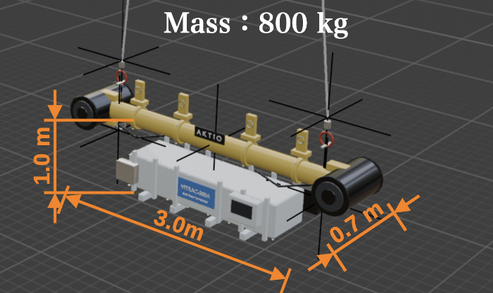
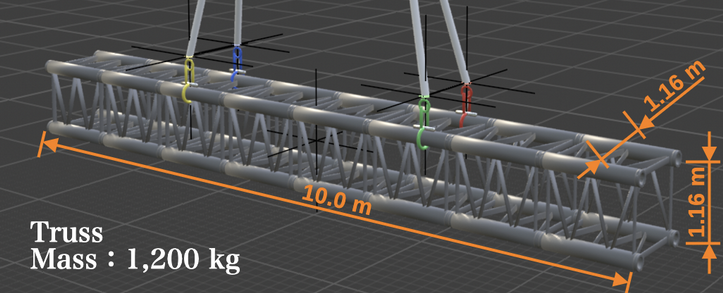
A simulation environment was developed that includes the control unit, suspended payloads (truss, H-beam, and plate), ropes, and a crane. The environment supports multiple payload configurations and external disturbance conditions for both development and performance evaluation.
Control Model Training
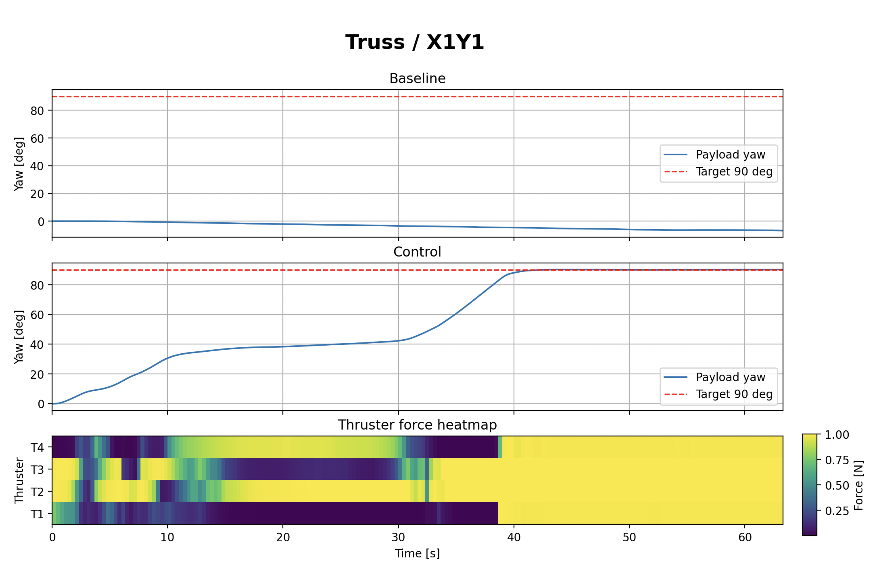
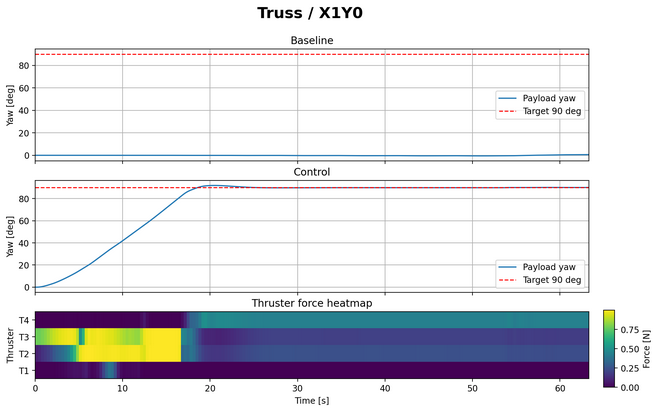
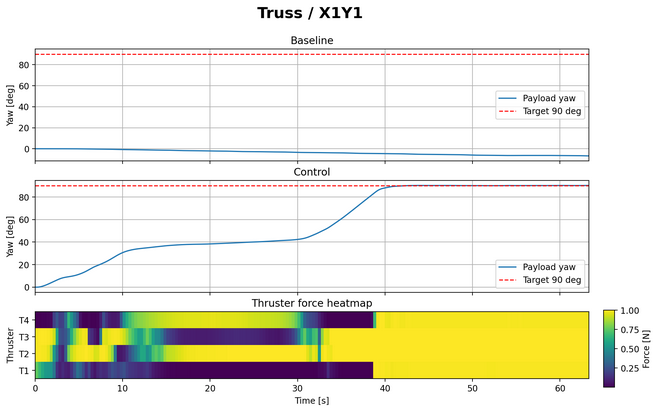
A reinforcement learning–based control model was trained to rotate the suspended payload to the target yaw angle. Representative control results are shown below under X-direction (X1Y0) and X/Y-direction (X1Y1) disturbance conditions. The model successfully achieved the target yaw under both disturbance conditions.
Yaw Estimation
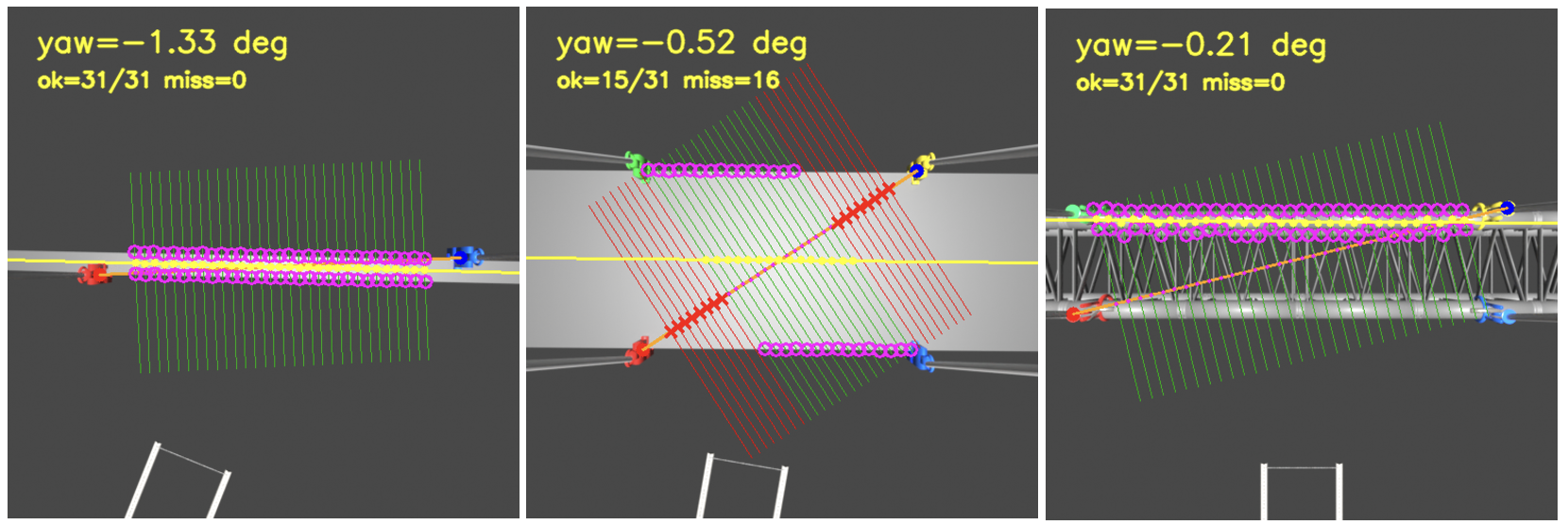
A camera mounted on the control unit captures images used to estimate the payload yaw angle. Colored hooks are first detected, and image-processing methods tailored to each payload geometry are then applied to determine the yaw angle. The examples below show the estimation process for the H-beam, plate, and truss payloads.
Vision-Based Control
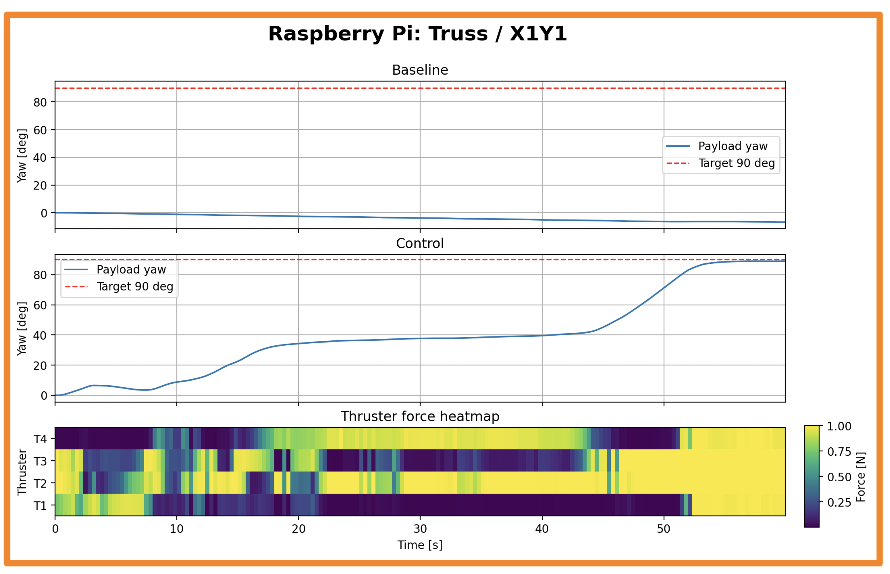
The payload yaw estimation model and the reinforcement learning–based control model were integrated and executed on a Raspberry Pi. The results below compare the Raspberry Pi implementation with the development environment under identical disturbance conditions, demonstrating equivalent control performance.